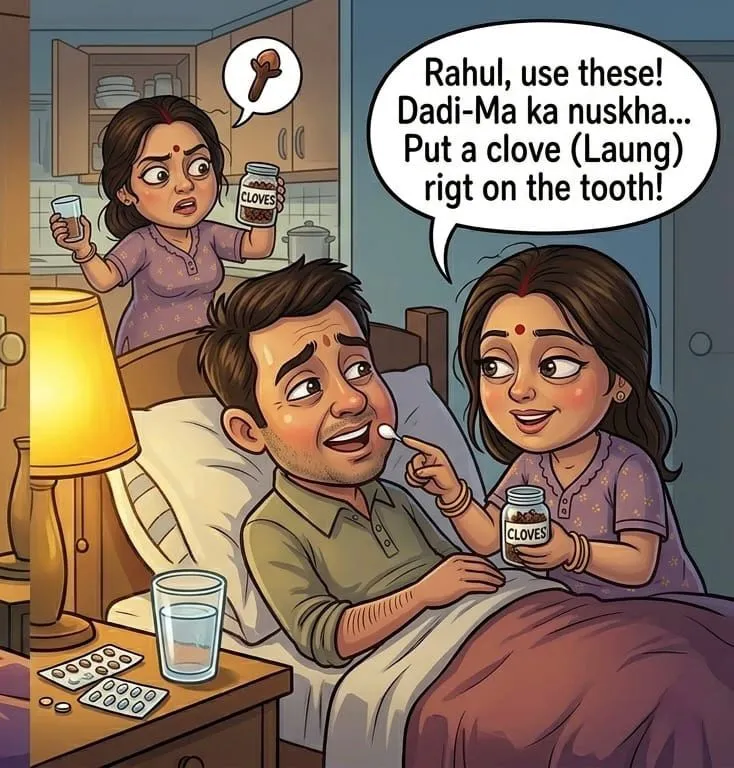
A sudden toothache can bring your entire day to a grinding halt. Whether it’s a sharp, shooting pain while drinking cold water or a dull, throbbing ache that keeps you awake at 2 AM, dental pain is hard to ignore.
In India, our first instinct is often to turn to the kitchen. While traditional Dadi-Nani ke nuskhe (grandma's remedies) can be incredibly effective for temporary relief, it is essential to know which remedies work safely and when it’s time to book an appointment with your dentist.
Here is a guide on how to stop a toothache fast at home using safe, accessible methods.
The Tried-and-Tested Kitchen Remedies
1) The Mighty Clove (Laung) or Clove Oil
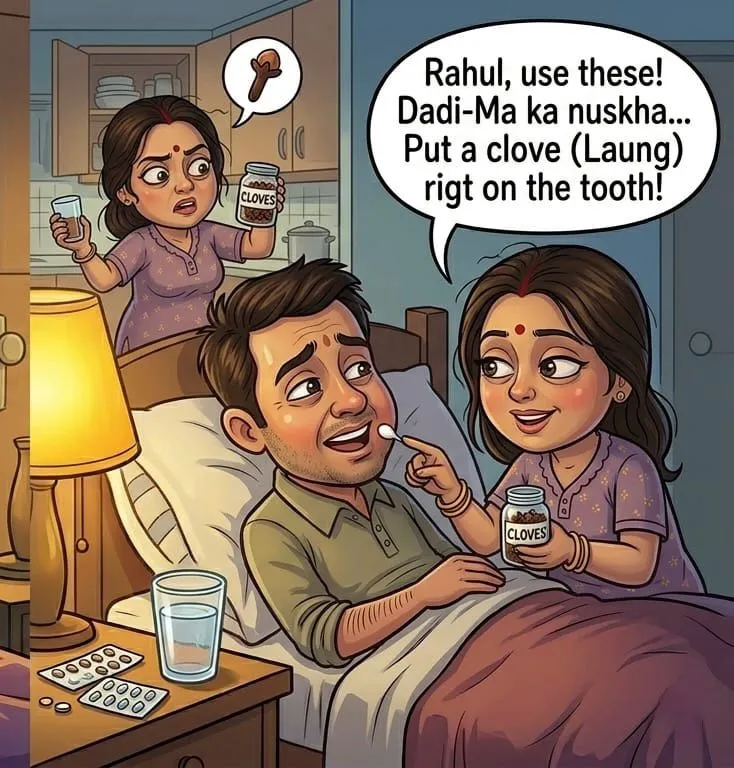
For generations, cloves have been India’s go-to emergency remedy for dental pain, and science backs this up. Cloves contain eugenol, a natural anesthetic and antiseptic compound that temporarily numbs the pain and fights bacteria.
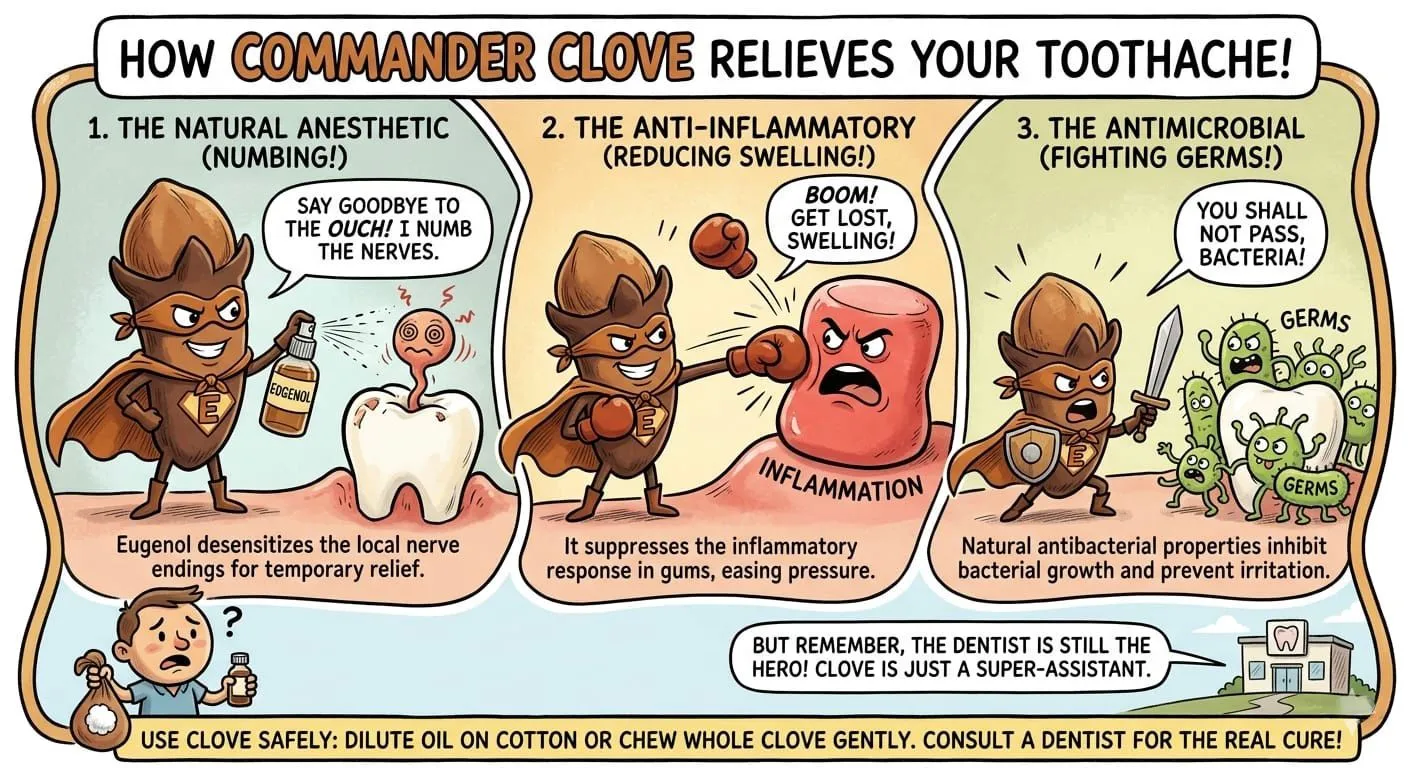
How to Use Clove Oil for Toothache Safely: If you are looking for quick relief, you can use cloves in two ways:
- Clove Oil: Dilute 2–3 drops of essential clove oil with a safe carrier oil (like olive oil or coconut oil) on a cotton ball, and gently press it against the affected area. Never apply undiluted clove oil directly to the gums, as it can cause chemical burns or irritation.
- Whole Cloves: Place a whole clove near the aching tooth and gently chew or press on it to release its oils.
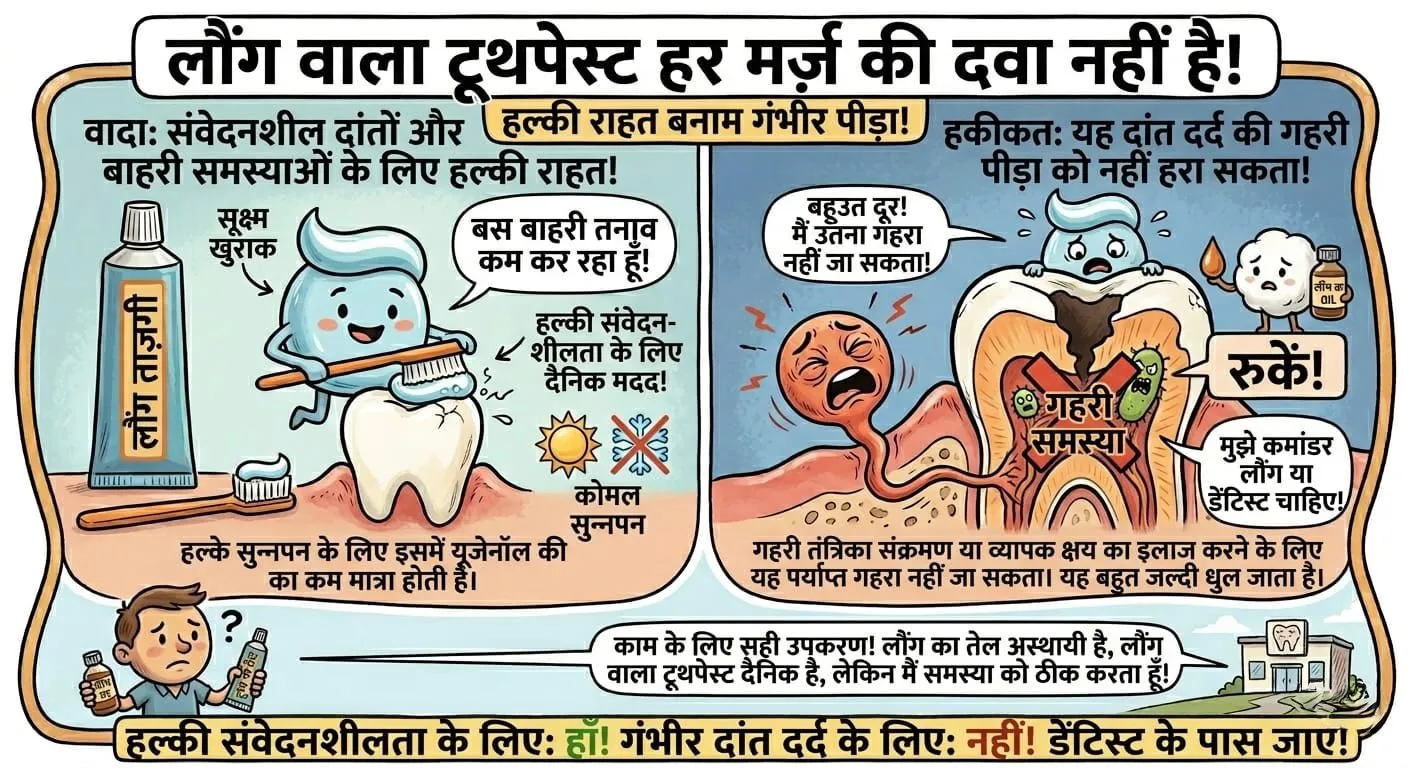
Is toothpaste with clove helpful in acute dental pain?
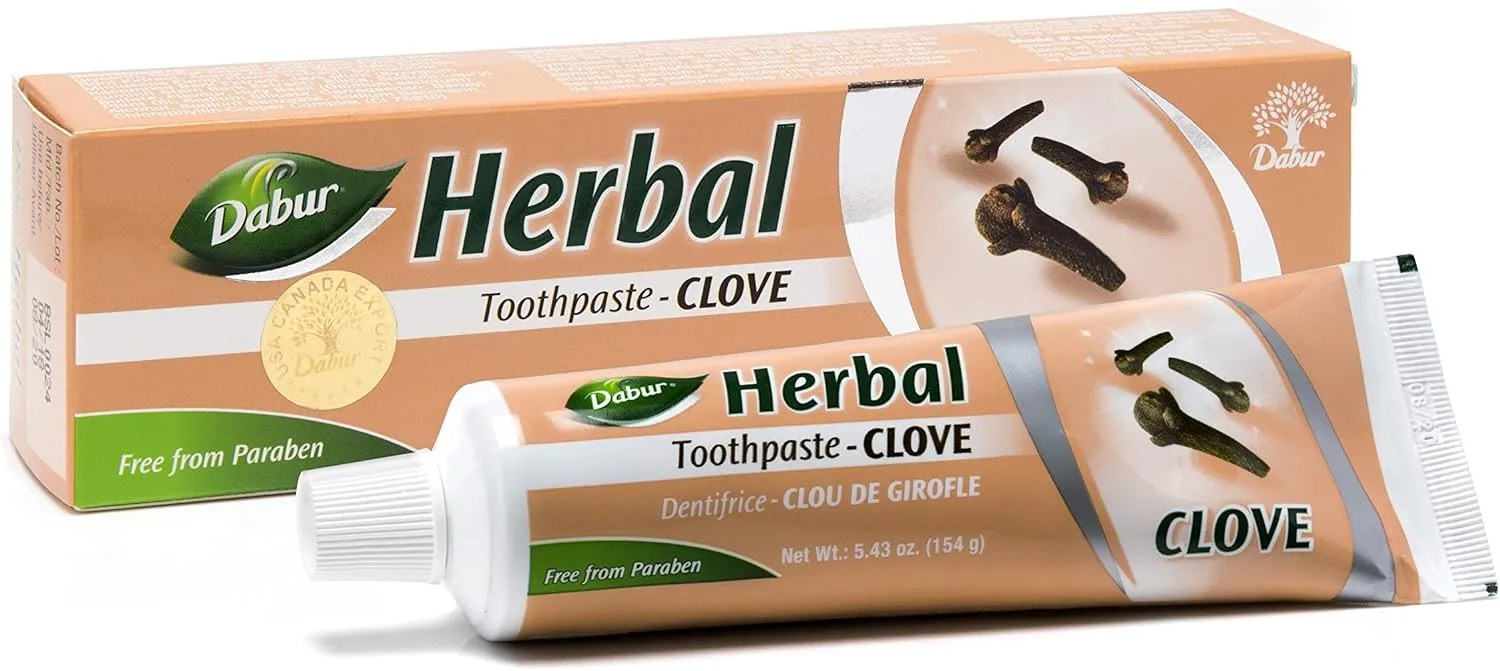
Yes, toothpaste containing clove components (or eugenol) can provide mild, temporary relief for sensitive teeth or a low-grade ache, but it is not strong enough to stop an active, acute toothache.
Here is a breakdown of why it helps a little but has its limits:
Why It Offers Some Relief
- Micro-Doses of Eugenol: Daily-use toothpastes formulated with clove oil do deliver a small amount of eugenol to the area, which can help soothe irritated gums and mild dentin hypersensitivity.
- Desensitizing the Surface: Combined with regular brushing, the natural numbing properties can take the edge off minor discomfort caused by hot, cold, or sweet triggers.
Why It Fails Against a True Toothache
- The Concentration is Too Low: Toothpaste is formulated for daily oral hygiene, meaning the concentration of clove oil is heavily diluted so it doesn't burn or irritate your mucosal linings with long-term use. It doesn't have the concentrated numbing power of pure, diluted clove essential oil.
- It Can't Reach the Source: A true, throbbing toothache usually means the infection or inflammation has reached the pulp (the nerve centre deep inside the tooth). Toothpaste only sits on the outside surface of the enamel and gums for a minute or two before being rinsed away—it cannot penetrate deep into a decayed cavity or an infected root canal.
The Verdict
Using a clove-based toothpaste is great for preventative care, mild gum irritation, and general tooth sensitivity. However, if you are dealing with a severe, throbbing toothache, toothpaste won't cut it. You will still need targeted temporary relief (like diluted clove oil on a cotton ball) until you can get to a dental clinic to treat the root cause.
2) The Warm Saltwater Rinse (Namak-Paani)
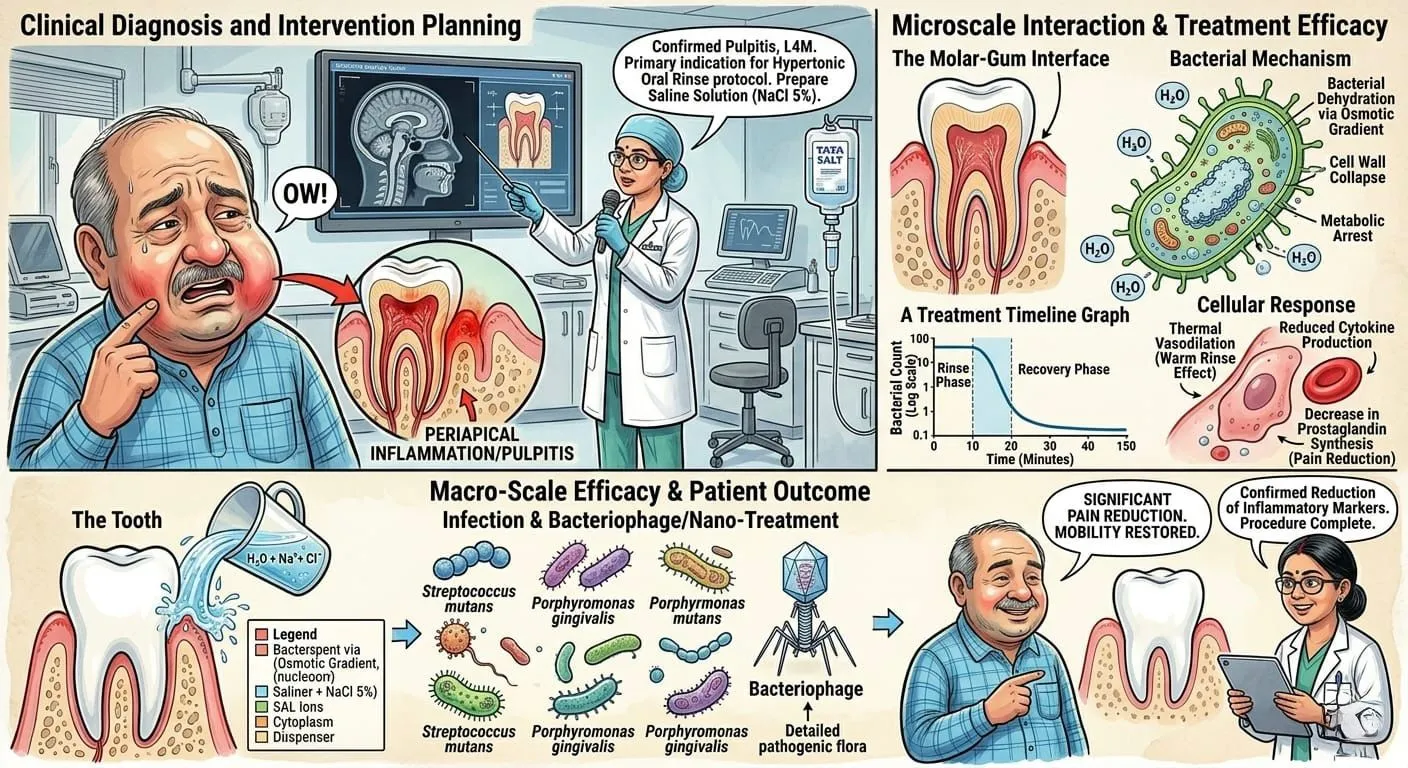
Before trying anything complex, start with a simple warm saltwater rinse. Salt acts as a natural disinfectant and helps draw out fluid from inflamed tissues, reducing swelling. It also helps dislodge any stubborn food particles trapped between your teeth.
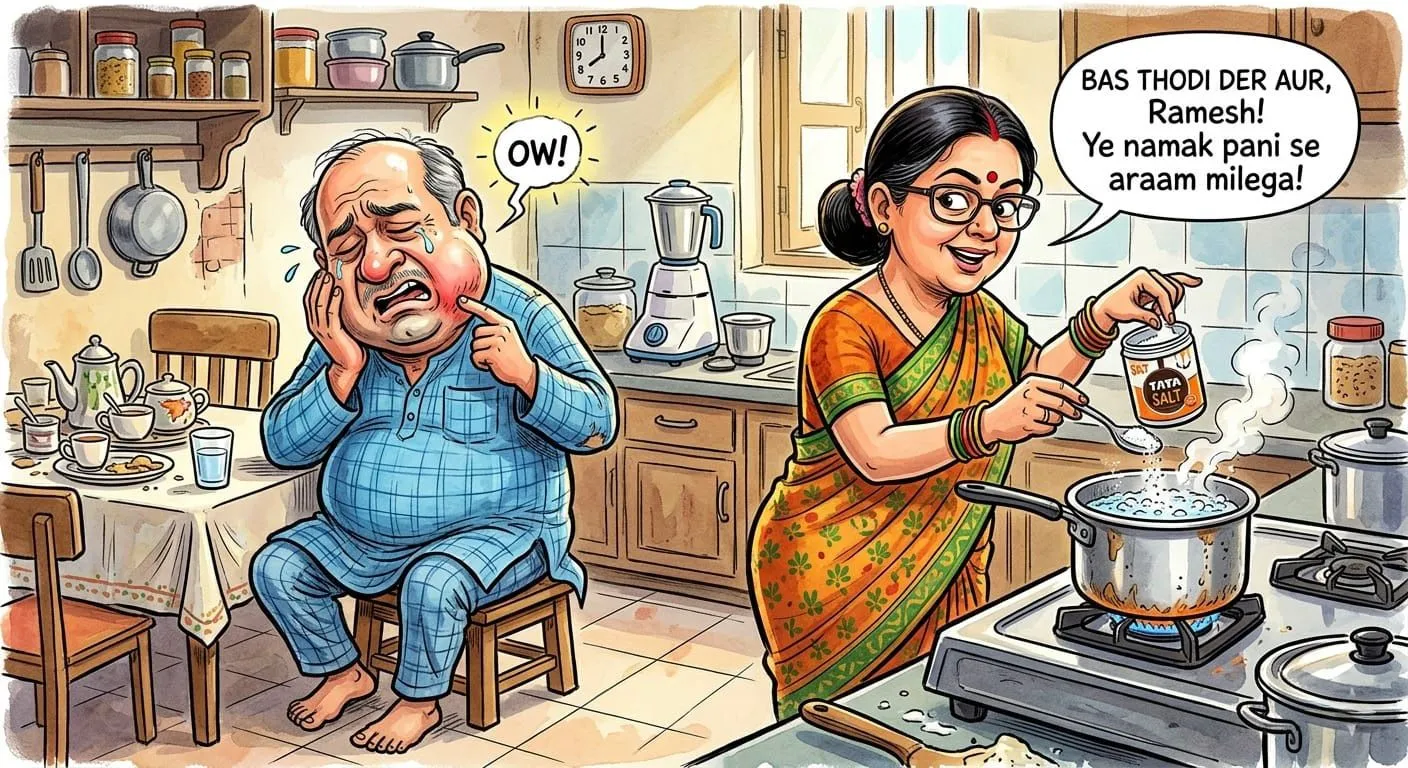
- How to use: Mix \frac{1}{2} teaspoon of regular table salt into a glass of warm water. Swish it thoroughly around your mouth for 30 seconds and spit it out. Repeat 3 to 4 times a day.
3) Turmeric Paste (Haldi)
Known universally in Indian households for its anti-inflammatory and antibacterial properties, turmeric can help soothe throbbing gum pain.
- How to use: Mix a pinch of turmeric powder with a few drops of water (or mustard oil) to form a thick paste. Apply it gently to the aching tooth and gum area. Leave it on for a few minutes before rinsing.
4) Fresh Garlic Paste (Lahsun)
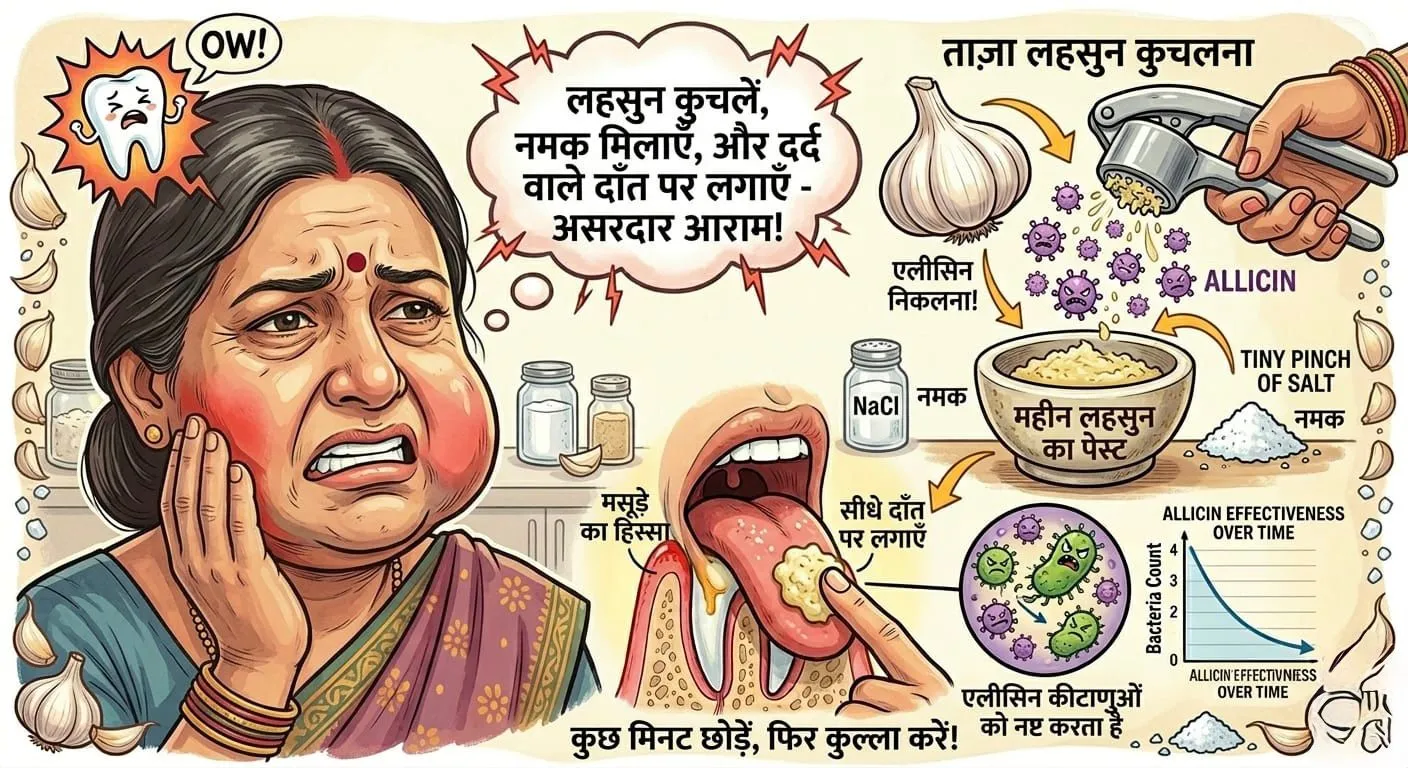
Garlic releases allicin, a powerful antimicrobial agent, when crushed. It can help destroy the bacteria causing the local irritation.
- How to use: Crush a fresh garlic clove into a fine paste, add a tiny pinch of salt, and apply it directly to the affected tooth.
Modern Quick-Relief Methods
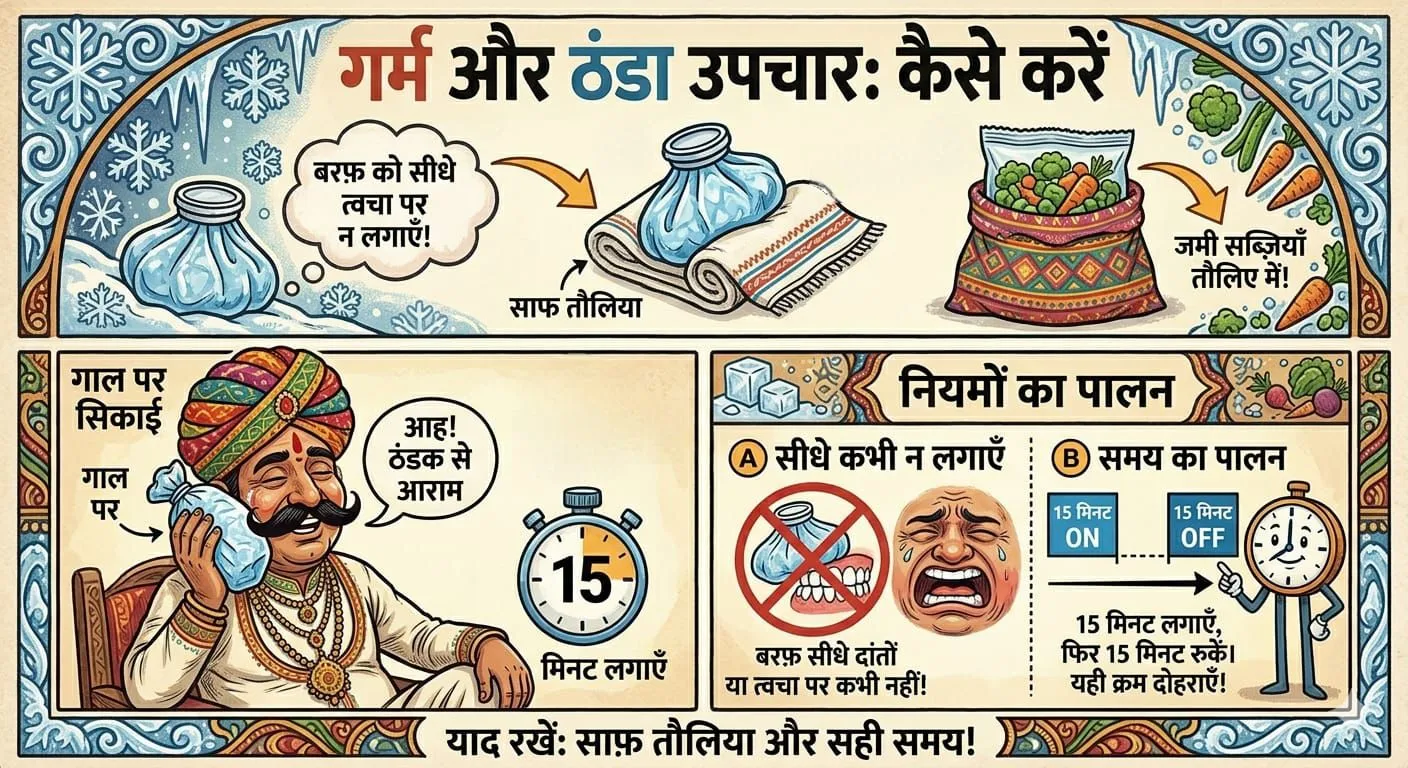
Cold Compress (Ice Pack). If your toothache is accompanied by a swollen cheek or jaw, cold therapy is highly effective. The cold temperature constricts the blood vessels in the area, reducing blood flow and significantly numbing the pain.
- How to use: Wrap an ice pack or a bag of frozen vegetables in a clean towel. Hold it against the outside of your cheek for 15 minutes on and then 15 minutes off. Never apply ice directly to the skin or teeth.
Elevate Your Head
Have you noticed that toothaches often feel much worse the moment you lie down to sleep? This happens because lying flat increases blood pressure to your head, causing more throbbing pressure in the dental pulp.
- How to use: Prop yourself up with an extra pillow or two to keep your head elevated above your heart level. This helps reduce the throbbing sensation, allowing you to rest.

What to Avoid When You Have a Toothache
When pain strikes, it is easy to make mistakes out of desperation. Keep these safety rules in mind:
- Never place a painkiller directly against the gum: A common myth is that crushing an aspirin or paracetamol tablet and placing it on the aching tooth helps. This is highly dangerous and causes severe chemical burns on your inner cheek and gum tissue. Always swallow medication with water as directed.
- Avoid extremely hot, cold, or sweet foods: If the tooth's nerve is exposed or inflamed, extreme temperatures and sugars will trigger agonising pain. Stick to soft, room-temperature foods until you see a professional.
The Golden Rule: Home Remedies Are a Band-Aid, Not a Cure
It is absolutely crucial to understand that home remedies only mask the symptoms; they do not cure the underlying problem.
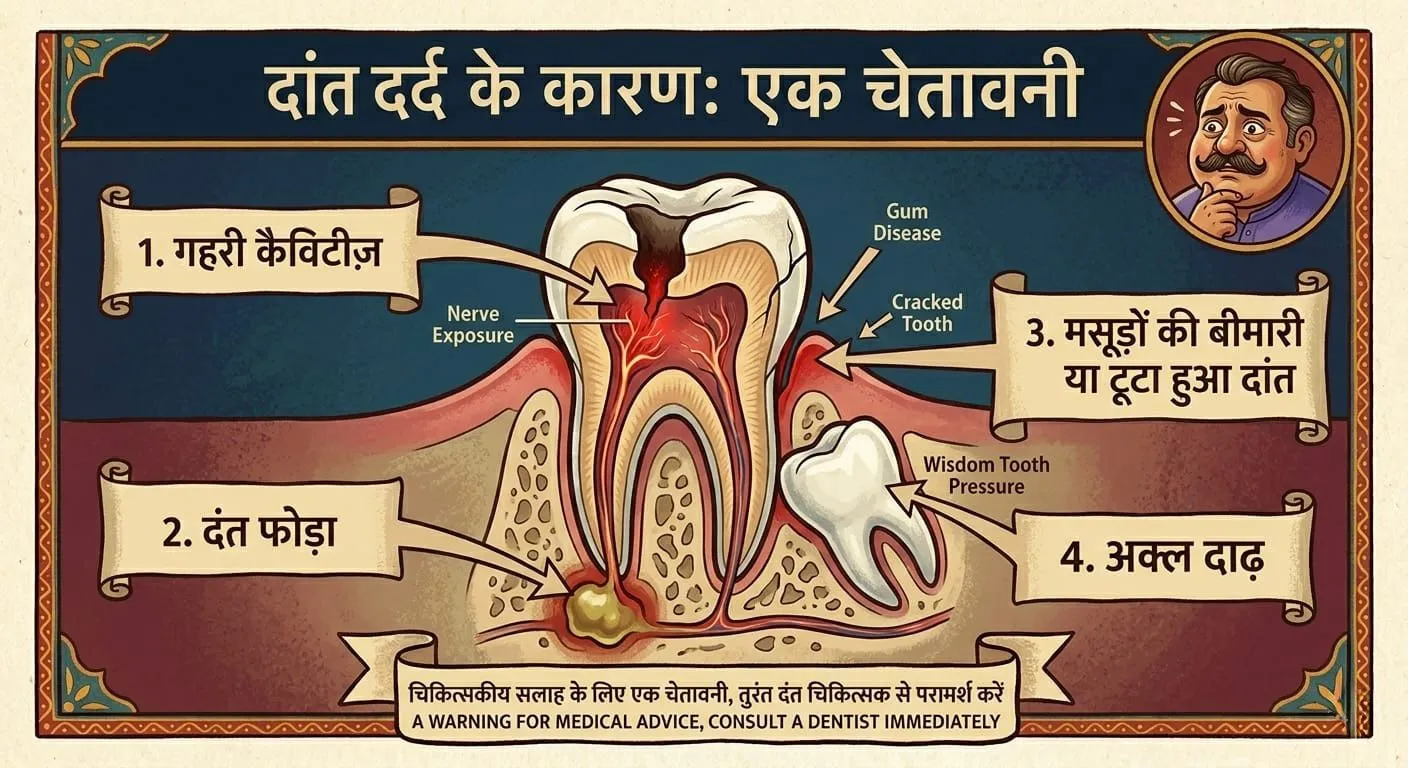
A toothache is usually a warning sign of an underlying issue, such as:
- Deep dental cavities exposing the nerve
- A dental abscess (an infection deep in the root)
- Gum disease or a cracked tooth
- An erupting or impacted wisdom tooth
While a saltwater rinse or clove oil can help you comfortably survive the night or the weekend, the bacteria causing the decay or infection will remain until a dentist physically cleans, treats, or restores the tooth.
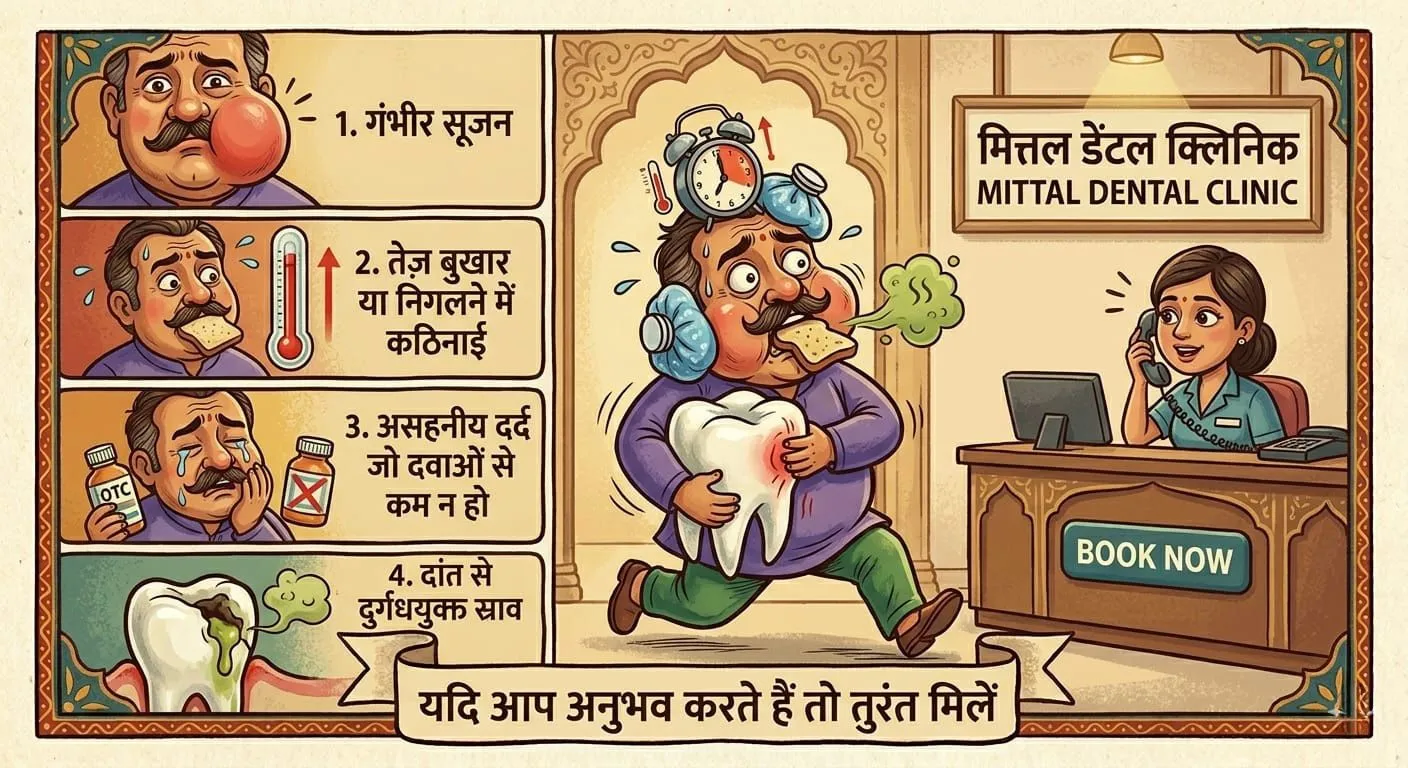
When to See a Dentist Urgently: You should book a dental appointment immediately if you experience the following:
- Severe swelling in your face, cheek, or jawline.
- A high fever or difficulty swallowing.
- Unbearable pain that does not respond to over-the-counter painkillers.
- A foul-tasting discharge (pus) coming from the tooth.
Take care of your smile! Use these quick remedies to get immediate comfort, but don't delay booking a professional check-up to ensure your teeth stay healthy for a lifetime.
Disclaimer: This article provides general educational information and should not replace professional medical or dental advice. Always consult a qualified dentist for diagnosis and treatment.